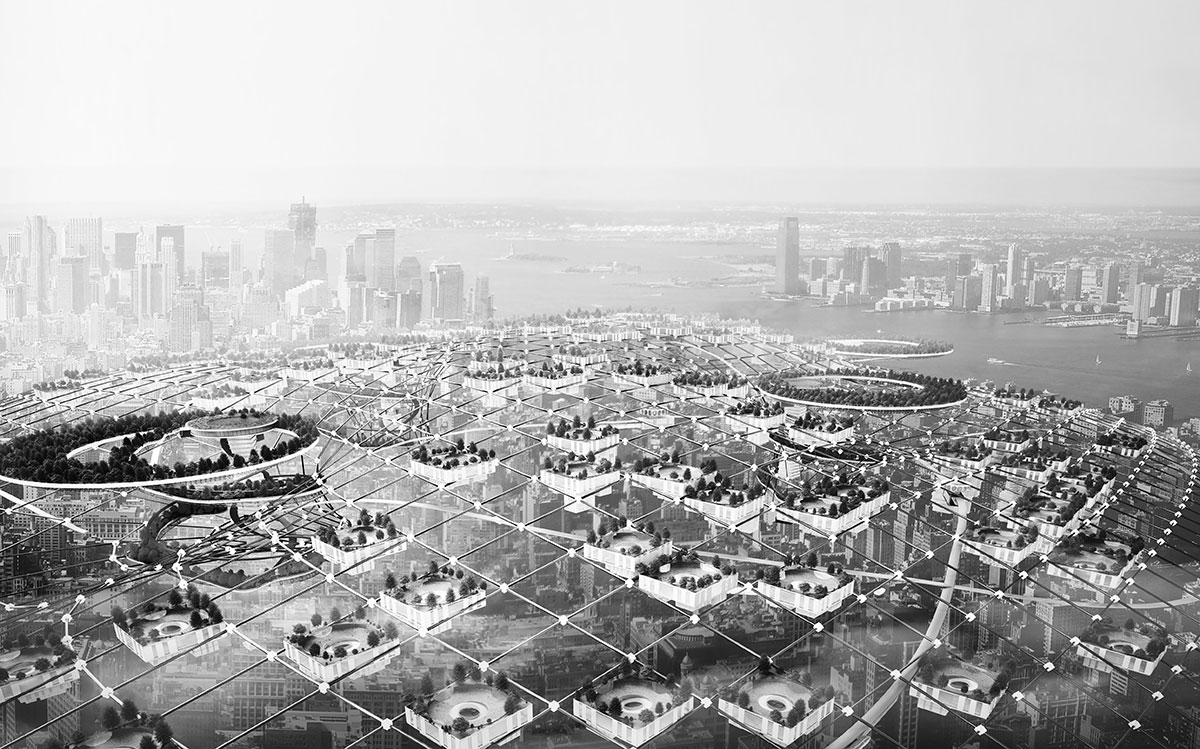
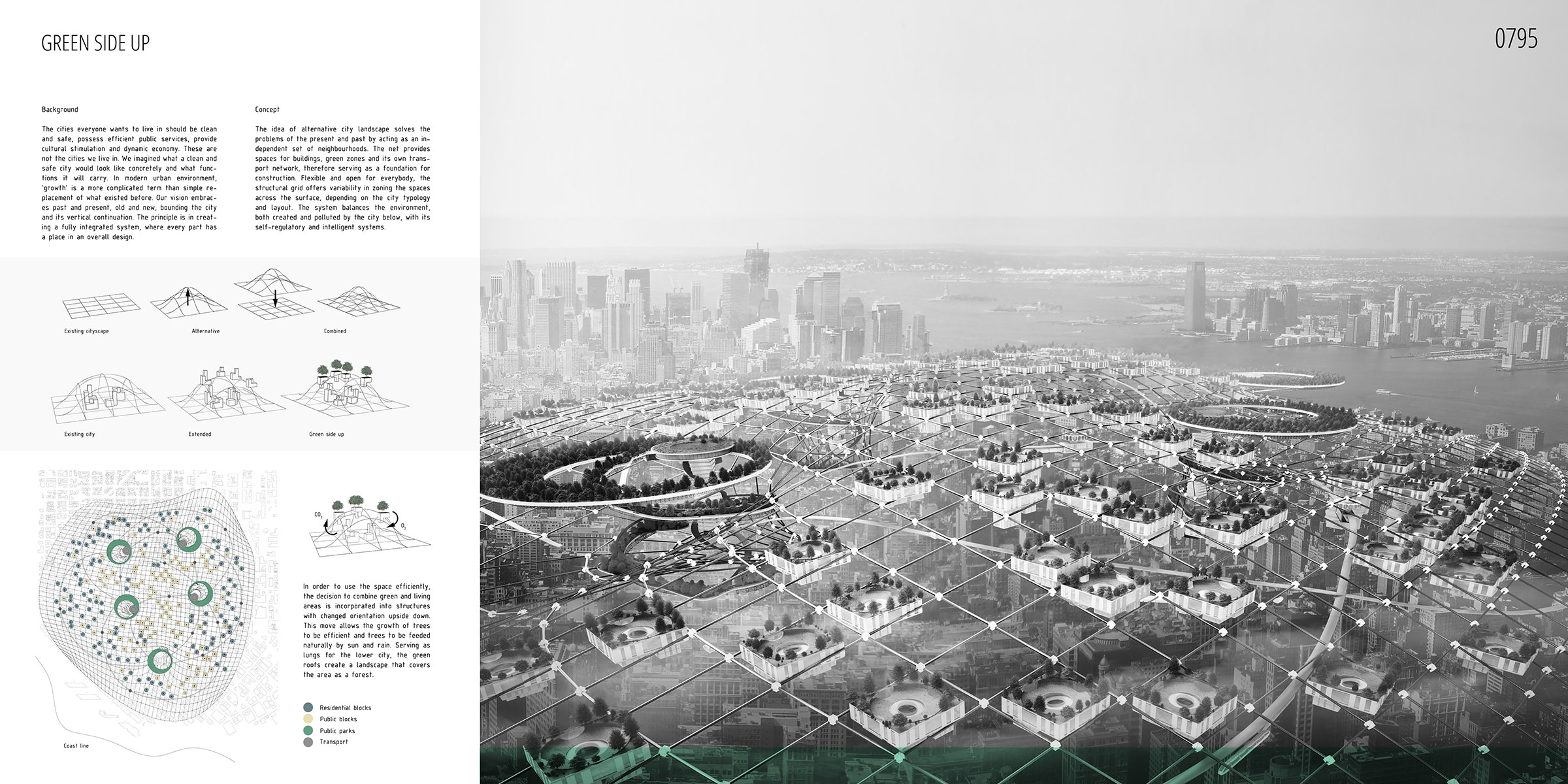
New City Grid is a speculative urban design proposal exploring how future cities might expand without replacing the existing urban fabric beneath them.
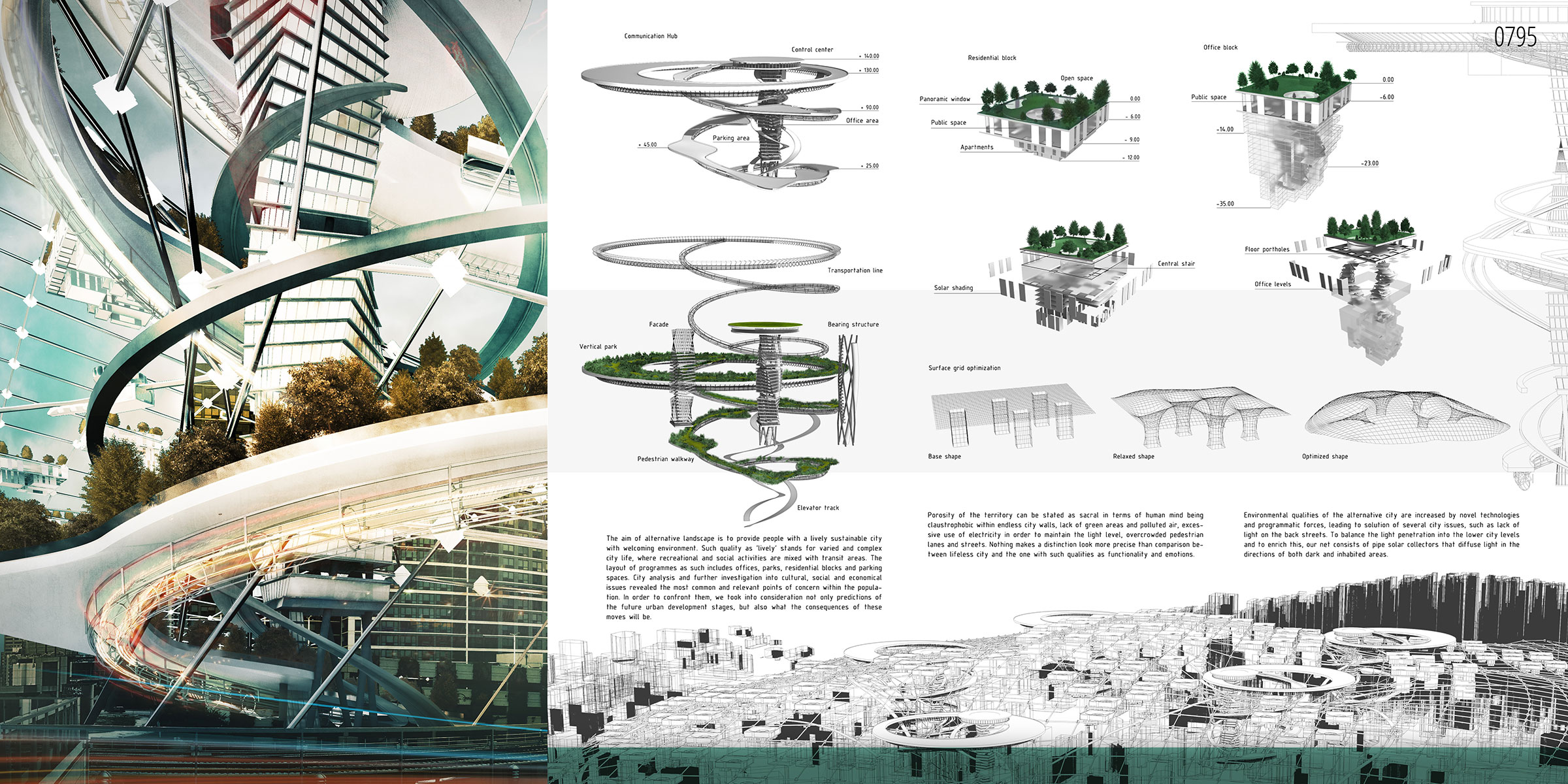
Rather than continuing horizontal expansion or large-scale demolition, the project proposes the creation of a new infrastructural layer suspended above the city. This elevated framework accommodates housing, public spaces, transportation networks and urban infrastructure while preserving the existing city below.
The concept investigates how contemporary cities can respond to increasing population density, limited land availability and the growing demand for sustainable urban development. By separating new growth from existing ground-level conditions, the proposal seeks to minimize disruption while creating opportunities for entirely new forms of urban organization.
The project combines architecture, infrastructure and urban planning into a single interconnected system. Large-scale structural frameworks support modular residential and public programs, creating a flexible urban environment capable of evolving over time.
Developed as a conceptual research project, New City Grid explores the relationship between urban density, mobility, infrastructure and future city development. The proposal questions traditional models of urban expansion and imagines an alternative approach in which cities grow vertically through layered systems rather than outward through continuous sprawl.
The project was selected as an Editor’s Choice and published by eVolo Magazine in 2016.
Project Information
Project: New City Grid
Type: Conceptual Urban Design Proposal
Year: 2016
Status: Research Project
Publication
Editor’s Choice
eVolo Magazine (USA)
Published: June 29, 2016
Original publication:
https://www.evolo.us/new-city-grid-floating-above-existing-cities/
Authors
Sergej Pogorelov
Siarhei Kuratski
Andrei Mikhalenko
Anastasiya Neumiarzhytskaya
Dmitrij Kisselev
My Role
Concept development, architectural design, computational design research and project development.
Editorial Note
Project images are reproduced for archival and portfolio purposes. Original publication appeared in eVolo Magazine in 2016.


